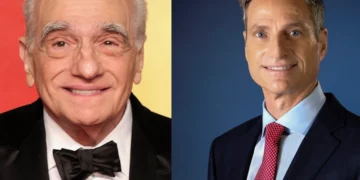












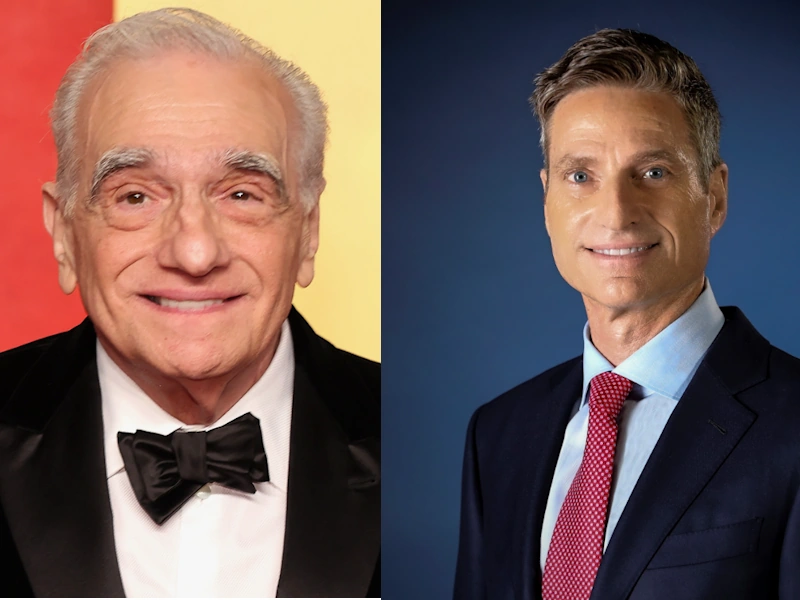
One spent his career around jet engines, cell towers, and national defense contracts. The other spent his around cameras, film stock, and stories about flawed people. Jim Taiclet and Martin Scorsese will never appear in the same sentence in a business magazine or a film journal, but their paths share a theme: each rose to the top of a demanding field by combining deep craft with a clear sense of purpose.
Jim Taiclet: From the cockpit to the corner office
Taiclet began his working life in uniform. A graduate of the US Air Force Academy, he earned degrees in engineering and international relations, then trained as a pilot. He flew the C-141B Starlifter, a large military cargo jet, and logged thousands of flight hours. He also served during the Gulf War.
After the Air Force, he moved into the corporate side of aviation, taking on leadership roles at Pratt and Whitney, where he worked on engine overhaul and repair, and later at AlliedSignal, which became part of Honeywell. Then came an unexpected turn. In 2001 he joined American Tower, a company that owns the physical structures wireless carriers rely on. Under his leadership the business grew into a global player, and its market value climbed from roughly 2 billion dollars to more than 100 billion.
In 2020, Lockheed Martin chose him to succeed Marillyn Hewson as chief executive, and he became chairman the following year. He had already sat on the company’s board since 2018, so the role was not a cold start.
Since taking over, he has promoted a strategy the company calls 21st Century Security. The idea is that defense contractors should work more closely with technology and telecom firms, and that equipment from different makers should be able to talk to one another, including through tools like 5G connectivity and artificial intelligence.
Martin Scorsese: The boy from Little Italy who learned to see
Scorsese was born on November 17, 1942, in Queens, New York, and grew up in the Little Italy neighborhood of Manhattan. Childhood asthma kept him from many outdoor activities, so he spent hours at the movies and, in his own telling, learned to study how images worked. He later attended New York University, where he began making short films.
His breakthrough came in 1973 with Mean Streets, a raw story of small-time hustlers that introduced the screen partnership of Scorsese and Robert De Niro. Taxi Driver followed in 1976 and won the top prize at the Cannes Film Festival. Then came Raging Bull in 1980, often named among the finest American films ever made.
The list keeps going: The Last Temptation of Christ, Goodfellas, Casino, Gangs of New York, The Aviator, and The Departed, which won him the Academy Award for Best Director and also took Best Picture.
He kept working at a remarkable pace, with Hugo, The Wolf of Wall Street, Silence, The Irishman, and Killers of the Flower Moon. He has also made music documentaries, including one on Bob Dylan and one on George Harrison.
Just as important is what he does beyond directing. In 1990 he helped found The Film Foundation, an organization dedicated to preserving and restoring old films that might otherwise have crumbled away.
What they have in common
Putting these two together is a thought experiment, not a documented partnership, but the comparison is worth making.
Mastery of craft. Taiclet understands aircraft and engines from the inside, having flown and serviced them. Scorsese understands editing, framing, and sound the same way, and he has worked for decades with the same trusted editor, Thelma Schoonmaker.
Long careers built on adaptation. Taiclet moved from the military to engines to telecom and back to defense. Scorsese moved from gritty street dramas to historical epics, family fare, and documentaries.
A belief in the bigger system. Taiclet argues that different companies must connect their technology. Scorsese argues, through film preservation, that the history of cinema belongs to everyone and must be protected.
Final thoughts
Taiclet and Scorsese show that leadership comes in many forms. One steers a vast aerospace and defense company, and the other steers a vision on screen. Both answer to demanding audiences, and both have held their positions for a long time by staying curious. If you ever need a reminder that expertise and purpose can lead to the top of almost any field, their stories are a good place to start.