












Megazee.com presents itself as a broad, multi-category publishing website covering business, technology, finance, lifestyle, and general-interest topics, with a homepage claiming it has been operating since December 2004.
Before getting into what the site actually publishes, there’s one specific claim on its own homepage that deserves attention first, because it directly contradicts the very need for the dozens of explainer articles written about the site.
The Claim That Doesn’t Add Up
Megazee.com’s own homepage states plainly: “We influence 20 million users and is the number one business and technology news network on the planet.” This is an extraordinary claim.
If accurate, it would mean Megazee.com surpasses every other business and technology publication in the world, including globally recognized names like TechCrunch, Bloomberg, Reuters, CNBC, and WIRED, in overall influence and reach.
That claim doesn’t hold up against a simple, observable fact: a website that is genuinely the number one business and technology news network on the planet would not require at least six separate third-party articles, published across different, unrelated domains, each specifically written to explain “What Is Megazee.com?” to readers encountering it for the first time.
Established, globally dominant publications don’t generate a steady stream of “what is this website” explainer content, because their audiences already know exactly what they are. The sheer existence of this explainer content cluster is itself strong evidence against the claim it’s describing.
What the Site Actually Publishes
Setting the inflated claim aside, Megazee.com functions as a general-interest, multi-category content website. According to both the site itself and third-party reviews examining it directly, its coverage spans business, technology, finance, artificial intelligence, lifestyle, real estate, sports, home-related topics, and general news, organized into a magazine-style structure with categories readers can browse by interest.
The site displays recently dated articles, suggesting ongoing, active publishing rather than a dormant or abandoned domain, and includes standard elements like a privacy policy, terms of use, and a sponsored-content section.
A Long Claimed History Without Matching Signals
Megazee.com states directly that it has been “online since December 2004,” which would make it a genuinely long-running website with over two decades of operating history. This kind of longevity claim is significant, and if accurate, would normally be reflected in things like an extensive content archive, a recognizable brand reputation independent of explainer articles, and a track record referenced by other, clearly independent publications.
Instead, much of the content found across Megazee.com’s own pages reads as generic and repetitive, offering broad, interchangeable descriptions like providing “educational content about SaaS technologies” or helping readers “improve their understanding of financial topics,” phrasing general enough to apply to nearly any content site regardless of actual subject expertise.
This kind of generic, low-specificity language is a notable mismatch with what a genuinely established, two-decade-old publication’s content would typically look like.
Multiple Domains Presenting the Same Identity
Adding to the picture, at least three separate domains present themselves as connected to or representative of Megazee: megazee.com itself, mymegazee.com, and themegazee.com. Each describes a similar, broad set of categories and uses closely related branding and descriptive language.
This kind of domain proliferation, multiple separate web addresses reinforcing the same name and general identity, is a pattern seen repeatedly across other sites built around generating search visibility through volume and cross-referencing rather than a single, clearly established web presence.
A Cluster of Nearly Identical Third-Party Reviews
Beyond the site’s own domains, Megazee.com is also the subject of a cluster of very similarly structured third-party “review” or “explainer” articles, hosted on domains including thenighttimes.co.uk, neworldsmagazine.co.uk, and linguaezone.com, among others.
These articles follow a recognizably repeated format: a “What Is Megazee.com?” section, a discussion of whether it counts as a news website or a broader publication, trust signal commentary, and a closing FAQ section.
This kind of repetitive, templated third-party coverage is a pattern seen across numerous other sites covered elsewhere, often reflecting a broader content network producing similar explainer material across many different domains rather than genuinely independent, organic interest from separate outlets.
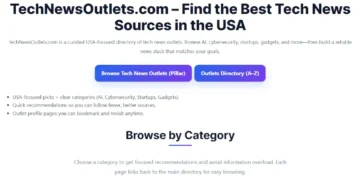
Notably, one of these review sites, megazee.org, a different domain from megazee.com itself, has also appeared writing similar explainer content about an entirely separate site, TechNewsOutlets.com, suggesting these domains may be part of a broader, interconnected content-publishing network rather than independent, unrelated reviewers.
What This Means in Practice
None of this necessarily means every article published on Megazee.com is inaccurate, general-interest content sites of this kind can still publish reasonable, usable information on broad topics. What it does mean is that Megazee.com’s own self-description, particularly its claim to be the single most influential business and technology news network on the planet, should be treated with significant skepticism rather than taken at face value.
The mismatch between that claim and the site’s actual visible signals, generic content language, a cluster of explainer articles needed to introduce it to readers, and multiple reinforcing but unremarkable domains, points toward a general content-volume publishing operation rather than a genuinely dominant global news authority.
How to Evaluate a Site Making Claims Like This
When a website makes a bold, superlative claim about its own reach or authority, a few checks help verify whether that claim holds up. Consider whether the site’s reputation would genuinely require explainer articles to establish basic facts about what it is, since truly dominant platforms rarely need this kind of introduction.
Compare the specificity and depth of the site’s own content against the scale of its claimed influence or history. And check whether multiple domains are reinforcing the same identity and claims, which can create an artificial impression of scale and establishment that doesn’t reflect genuine, independently verified authority.
Final Thoughts
Megazee.com is an active, multi-category content website covering business, technology, finance, and lifestyle topics, but its claim to be “the number one business and technology news network on the planet” with 20 million users does not hold up against the most basic observable evidence: a website with that level of genuine global dominance would not require the swarm of third-party explainer articles currently needed to tell readers what it even is.
Combined with a pattern of multiple reinforcing domains and generic, repetitive content language, Megazee.com is best understood as a general content-publishing site making significantly inflated claims about its own scale and authority, rather than the globally dominant platform it describes itself as on its own homepage.