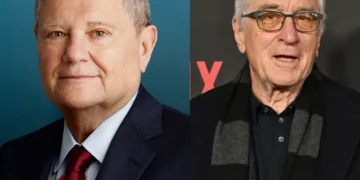












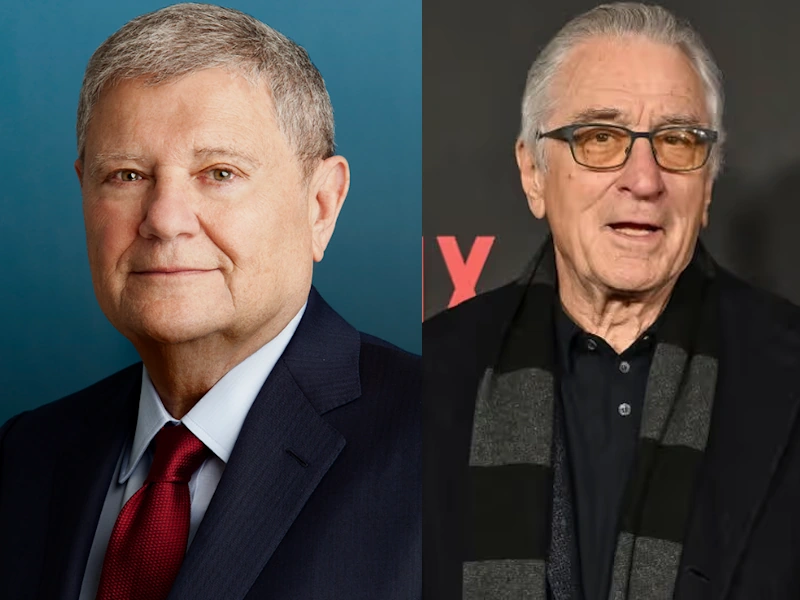
New York has always rewarded people who build things. Some build skyscrapers, others build careers on a screen. Jerry Speyer and Robert De Niro come from opposite ends of that spectrum, but both became known as figures who gave something back to the place that made them.
Jerry Speyer, the builder
Jerry Speyer was born on June 23, 1940, in Milwaukee, Wisconsin, and he went on to study at Columbia, finishing both his undergraduate degree and an MBA in 1964. His first job was a modest one, working as an assistant to a vice president at Madison Square Garden. Real estate became his lane soon after.
In 1978, Speyer teamed up with his father-in-law, Robert Tishman, to launch Tishman Speyer. The firm grew into an international developer and landlord with towers across the United States, Europe, Asia, and Latin America.
In New York it became tied to some of the most recognizable addresses in the world, including Rockefeller Center and, for a long stretch, the Chrysler Building.
Over time, Speyer gradually passed day-to-day control to his son Rob, who became sole chief executive in 2015, while Jerry stayed on as chairman. Outside the company, he took on a long list of public roles.
He chaired the Museum of Modern Art, led the board of the Federal Reserve Bank of New York, and served on the board of the National September 11 Memorial and Museum. He is also a serious collector of contemporary art, and some of that taste shows up in the public spaces of his buildings.
Robert De Niro, the performer
Robert De Niro was born on August 17, 1943, and grew up in Manhattan. He trained under respected acting teachers and built a reputation for disappearing into his roles, often preparing with an almost obsessive level of detail.
The 1970s made him a star. Mean Streets, The Godfather Part II, and Taxi Driver turned him into one of the defining screen actors of his generation. He won an Oscar for his supporting turn in the second Godfather film and another for playing a boxer in Raging Bull.
Later work in Goodfellas, Casino, Meet the Parents, and Killers of the Flower Moon showed he could move between menace and comedy without losing his edge.
Where their stories overlap
The clearest link between the two is what each did after the attacks of September 11, 2001, which badly damaged Lower Manhattan, both emotionally and economically.
De Niro, together with producer Jane Rosenthal and Craig Hatkoff, launched the Tribeca Film Festival in 2002 as a way to bring people and business back to his downtown neighborhood. It grew into a major annual event. He had already invested in the area years earlier through a film production company and a restaurant that became a neighborhood fixture.
Speyer approached the same recovery from the board room. His seat on the board of the memorial and museum tied his name to the long, difficult effort to commemorate the attacks and rebuild the surrounding district.
Both men have also been recognized by the city’s business community. Each has been honored in a Hall of Fame run by a New York business publication, which says a good deal about how local leaders view their influence.
Two lessons from their paths
- Long-term thinking pays off. Speyer spent decades assembling a portfolio and then handed it to the next generation. De Niro spent decades building a body of work and then added institutions around it.
- Local commitment matters. Neither man treated New York as just a backdrop. Both invested time, money, and reputation in making it stronger.
Final thoughts
One shaped the skyline and the other shaped the way the world sees the city on film. Their stories show that influence can take very different forms and still serve the same community. If you ever visit the city, you will likely encounter both legacies without even trying, in a plaza, a theater, or a downtown street that looks busier than it once did.