











Animal welfare often runs on the quiet effort of people who rarely make headlines. donna sicuranza is one of them. She leads a Connecticut nonprofit that tackles pet overpopulation in a practical way: by bringing surgery to the animals instead of waiting for the animals to arrive.
Her role at TEAM
Donna Sicuranza is the executive director of TEAM, short for Tait’s Every Animal Matters. The organization is a registered animal welfare charity with a 1993 ruling year and a mailing address in Westbrook, Connecticut. Public filings list her as president and executive director, working alongside a treasurer who also serves as head veterinarian. In some of the group’s own correspondence she signs her name as Donna Sicuranza Marconi. Its online home is everyanimalmatters.org.
The mobile clinic idea
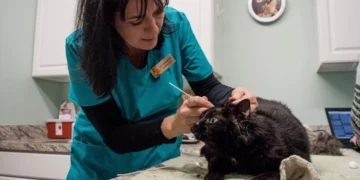
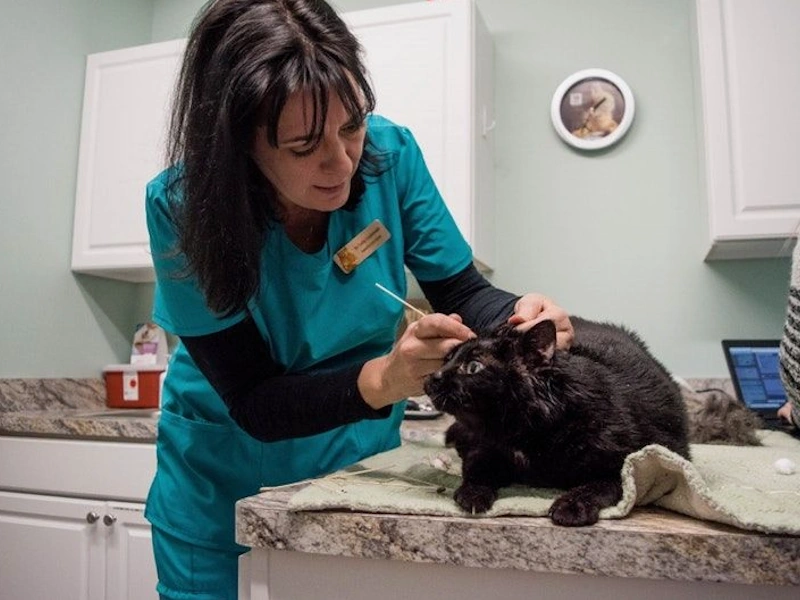
The heart of TEAM’s work is a vehicle outfitted for veterinary care that travels to communities. Local reporting has described this unit as still making its rounds after more than twenty years, with Sicuranza herself calling the journey a remarkable one. The logic is simple. Plenty of cat owners and caretakers never get their animals fixed because of distance, time, or cost, so taking the clinic to them removes a major barrier.
Why she focuses on cats
Her message on feral and stray cats puts responsibility on people rather than on the animals. In interviews she has pointed to unwanted cats being abandoned by roadsides and pets left unfixed, which then wander off and breed. She has also noted that relocating and leaving cats behind adds to the problem. A single unspayed cat can lead to many litters, so a handful of abandoned animals can grow into a large colony surprisingly fast.
The cost problem
Sicuranza is open about the money side of the issue. She has explained that a neuter for a male cat can run roughly two to three hundred dollars, and a female spay costs at least as much. For a family on a tight budget, or a volunteer looking after a colony, that adds up quickly. Low-cost clinics exist precisely to close that gap.
A view on contraceptive pills for cats
Earlier in her career she spoke on behalf of another group, FeralStat, in a story about a proposed contraceptive pill for cats. She raised a practical objection: in a colony of ten or eleven cats, you would struggle to dose every animal before one of them reproduced. Her conclusion was that surgical sterilization remains the better method.
What her work shows
Prevention beats rescue. Fixing cats early stops problems before shelters fill.
Access matters. A clinic that travels reaches people a fixed building never would.
Practical thinking works. She weighs real conditions in the field instead of ideal ones.
A note on name confusion
The surname Sicuranza is shared by several unrelated people, including an Italian mayor, a university professor, and others who appear in news and court coverage. This article is only about donna sicuranza of the Connecticut animal welfare organization.
Final thoughts
You will not find a long personal biography for Donna Sicuranza, and that suits the kind of work she does. Her record is the clinic, the surgeries it performs, and the cats that never have to live without a home. Anyone interested in humane ways to manage pet populations can learn plenty from her approach.