









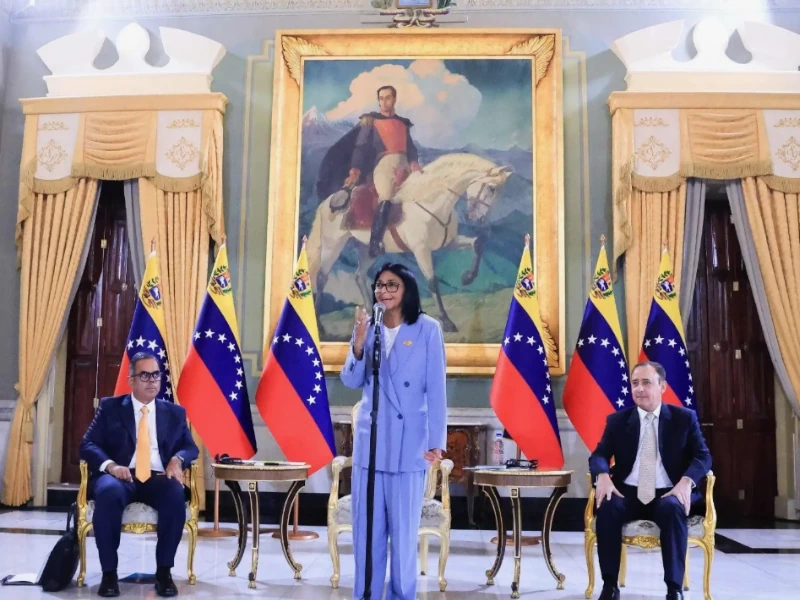
Venezuela has undergone one of the most dramatic political transformations in its modern history over the past year, following the capture of longtime leader Nicolás Maduro by United States forces and his subsequent extradition to face federal criminal charges in New York. In the months since, the country has been navigating a fragile interim government, an evolving and often contradictory relationship with Washington, and a rapidly shifting energy and economic landscape. Here’s a comprehensive look at where things stand.
The Capture of Nicolás Maduro
On January 3, 2026, U.S. forces captured Nicolás Maduro and his wife, Cilia Flores, in a military operation carried out in Caracas. Maduro was subsequently flown to New York to face a federal drug trafficking indictment, an extraordinary end to a presidency that had persisted through years of American sanctions, international isolation, and disputed elections. The operation marked one of the most significant direct U.S. actions against a sitting foreign head of state in recent memory, and it sent immediate shockwaves through Venezuela’s government and its citizens alike.
Delcy Rodríguez Steps Into Power
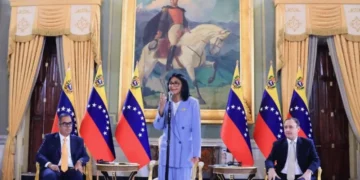
In the immediate aftermath of Maduro’s capture, Venezuela’s Supreme Court directed Vice President Delcy Rodríguez to assume the role of interim president for a 90-day term, a decision quickly backed by Venezuela’s military under Defense Minister Vladimir Padrino López. Rodríguez, who had served as Maduro’s vice president since 2018 and previously held roles including foreign minister and economic minister, was formally sworn into office on January 5, 2026, in a ceremony led by her brother, Jorge Rodríguez, president of Venezuela’s National Assembly.
Rodríguez brings a deep political history to the role. Born in Caracas on May 18, 1969, she is the daughter of Jorge Antonio Rodríguez, a Marxist guerrilla leader who died in police custody after his arrest in connection with the 1976 kidnapping of American businessman William F. Niehous, an event she has described as a foundational moment shaping her own political path. Maduro himself once referred to her as a “tiger” for her fierce defense of his government.
Since taking power, Rodríguez has struck a notably mixed tone toward the United States. In her initial public remarks, she called the American operation an “atrocity” that violated international law and insisted that Maduro remained Venezuela’s “only” legitimate president. At the same time, she has signaled a separate willingness to “collaborate” with the Trump administration, a duality that has left international observers uncertain about the true direction of her leadership. President Trump, for his part, said the U.S. had been in direct contact with Rodríguez and described her as “willing to do what we think is necessary to make Venezuela great again.”
Maduro’s Ongoing Legal Battle
Since his capture, Maduro has remained in U.S. custody fighting the federal drug trafficking charges brought against him. As of early September 2026, Maduro and his wife formally asked a U.S. judge to dismiss the indictment entirely, arguing that they hold immunity from prosecution given their former status as Venezuela’s head of state and first lady. The outcome of this legal challenge remains a closely watched, unresolved question, with significant implications for how the case, and the broader U.S.-Venezuela relationship, ultimately unfolds.
A Surprising Shift Toward Oil Cooperation
Despite the extraordinary and forceful circumstances surrounding the change in Venezuela’s leadership, relations between Washington and Caracas have moved in an unexpected direction: toward expanded oil cooperation. The United States and Venezuela have signed a new oil agreement, with U.S. Energy Secretary Chris Wright traveling to Caracas to meet directly with interim president Rodríguez to finalize the deal.
As part of this shift, oil giant Chevron pledged a $7 billion investment aimed at doubling its Venezuelan oil production. The Trump administration has publicly framed the broader agreement as a path toward lowering domestic gas prices for American consumers, though independent experts cited in coverage of the deal have expressed skepticism that any meaningful price relief will materialize quickly, noting that fully operationalizing expanded Venezuelan oil production could take years. As of September 16, 2026, the United States also reportedly removed Venezuela from an official drug-trafficking designation list, a further signal of the two countries’ evolving relationship since Maduro’s removal.
Enforcement Actions Continue Alongside Cooperation
Even as diplomatic and economic cooperation has expanded, the U.S. has continued enforcement actions connected to earlier sanctions targeting Venezuelan oil exports. This has included the seizure of tankers found in violation of U.S. sanctions, reflecting the still-unsettled and at times contradictory nature of the broader relationship, one simultaneously moving toward partnership on energy while still enforcing penalties tied to the prior sanctions regime.
Regional Diplomacy: Venezuela and Colombia
Venezuela’s post-Maduro government has also taken initial steps toward regional diplomatic engagement. In April 2026, interim president Rodríguez met with Colombian President Gustavo Petro in Caracas, where the two governments pledged military cooperation, marking the first such high-level bilateral engagement between the two nations since Maduro’s removal from power.
Domestic Reaction and Uncertainty
The reaction within Venezuela to these seismic changes has been decidedly mixed. Reporting from the ground in Caracas in the immediate aftermath of Maduro’s capture described a mood of shock and concern among residents. Maduro’s own son, Nicolás Maduro Guerra, a sitting legislator, publicly condemned the U.S. operation as a “kidnapping,” warning that normalizing this kind of action against a head of state posed a broader threat to global political stability. At the same time, many Venezuelans who had hoped for genuine democratic change have expressed disappointment that the interim government remains composed largely of Maduro-era loyalists, including Rodríguez herself, rather than reflecting a clean break from the previous administration.
What Remains Uncertain
Several significant questions remain unresolved as the situation continues to develop. Rodríguez’s 90-day interim mandate raises immediate questions about what comes next politically for Venezuela, and whether her government will move toward new elections, a longer transitional period, or another arrangement entirely. The outcome of Maduro’s immunity claim in his New York criminal case remains pending. And the durability of the new U.S.-Venezuela oil cooperation, still in its early stages and dependent on significant infrastructure investment, remains to be tested over the coming months and years.
Final Thoughts
Venezuela’s political landscape has been reshaped dramatically since the start of 2026, moving from decades of Maduro-era governance to an uncertain interim period under Delcy Rodríguez, all while the country’s relationship with the United States shifts unpredictably between confrontation and cooperation. With Maduro’s legal case still unresolved, a new oil partnership still in its early stages, and Rodríguez’s own political future uncertain beyond her 90-day mandate, Venezuela’s situation remains very much in flux, with significant developments likely still ahead.