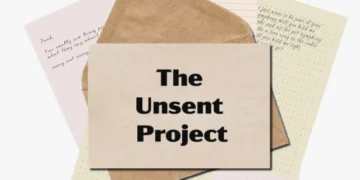








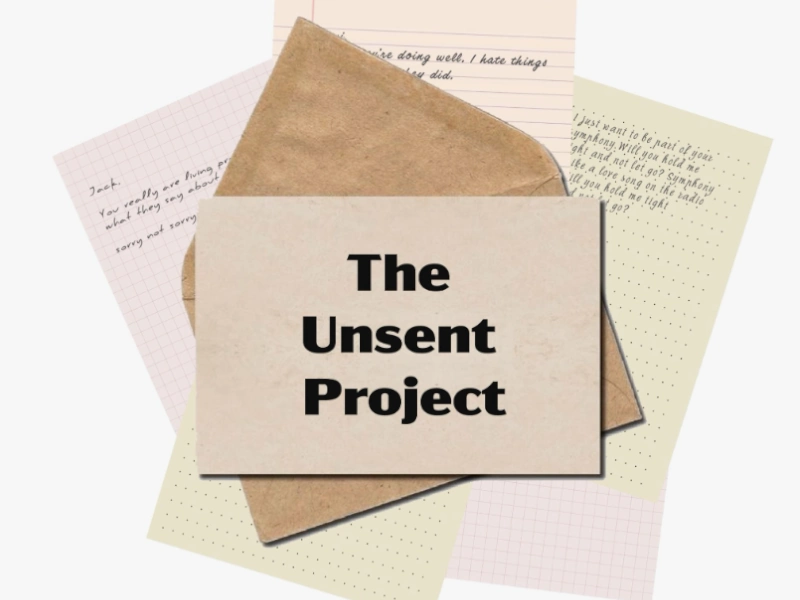
Everyone has typed out a message they never actually sent. A text to an ex explaining what really went wrong. A note to a friend after a falling out that never got resolved. A message to someone who passed away, written long after there was anyone left to receive it. The unsent message project, more formally known as The Unsent Project, was built entirely around this specific, quietly universal experience, turning thousands of these unsent words into a public, anonymous archive that has grown into one of the internet’s most emotionally resonant ongoing art projects.
This guide walks through how the unsent message project actually works, what happens after a message gets submitted, the reasoning behind its distinctive color system, and why so many people continue to seek it out, whether to submit their own words or simply to read someone else’s.
How the Unsent Message Project Started
Artist Rora Blue launched the project in 2015 with a fairly specific question in mind, wanting to understand what color different people mentally associate with love. To investigate this, Blue began collecting unsent text messages from contributors and asking each person to pair their message with a color representing the feeling behind it. What started as a small scale creative experiment focused narrowly on messages to first loves has since expanded dramatically, both in scale and in scope, now encompassing millions of submissions covering a much wider range of relationships and unspoken feelings.
What Counts as an Unsent Message
While the project’s original focus centered on first loves specifically, the definition of what counts as an unsent message submitted to the archive has broadened considerably over the years. Messages have been addressed to former romantic partners, close friends, estranged family members, siblings, and even pets. Some messages express longing or regret. Others process anger, grief, or unresolved conflict. Some are addressed to people who have since passed away, offering words that could never actually be delivered. This range reflects just how broadly the core concept, an important, unspoken message someone couldn’t or didn’t send, applies across nearly every kind of significant relationship in a person’s life.
How Submissions Actually Work
Contributing to the unsent message project is designed to be simple and, most importantly, anonymous. A person submits their message through the project’s official platform, along with a chosen background color meant to represent the emotional tone of what they’ve written. No names, contact information, or other identifying details are attached to the public submission itself. Once submitted, the message becomes part of the broader public archive, displayed as short text set against the contributor’s chosen color.
This anonymity is central to why the project functions the way it does. Contributors can write with complete honesty, without concern that the message will ever be traced back to them personally or seen by the actual intended recipient, creating space for a level of raw, unfiltered emotional expression that might otherwise feel too risky or exposing to share.
The Role of Color in the Archive
One of the most distinctive aspects of the unsent message project is its structured use of color to represent different emotional categories. Submissions are generally organized into color groups, including black, white, grey, red, orange, yellow, green, blue, pink, purple, and brown, each loosely tied to a particular emotional register. Black often signals darkness or despair connected to betrayal or heartbreak. White frequently reflects the ache of missing someone and wishing things had stayed the same. Grey tends to represent pain that comes paired with a degree of acceptance or understanding.
This color based structure allows the archive to function almost like an emotional index, letting visitors browse messages that share a similar feeling rather than requiring them to search only by name. For many visitors, exploring a specific color category becomes a way of finding messages that resonate with whatever they themselves are currently feeling or processing.
Searching the Archive
Beyond browsing by color, visitors can search the unsent message archive by name, looking specifically for messages that mention a particular first name, in case someone they know, or perhaps even they themselves, might have submitted something referencing that name. This search functionality has become part of the project’s broader cultural resonance, occasionally leading to viral moments when someone discovers a message seemingly meant for them, or recognizes a situation closely mirroring their own life within someone else’s anonymous words.
Why People Keep Returning to It
The sustained popularity of the unsent message project comes down to a fairly simple, universal truth, nearly everyone carries around words they never said to someone who mattered to them. Reading through the archive often produces an unusually strong sense of shared human experience, since the specific circumstances behind each message vary, but the underlying feelings, regret, longing, love, unresolved anger, tend to feel remarkably familiar across an enormous range of anonymous contributors.
For many visitors, the project offers something different than typical social media content, a space built entirely around vulnerability and honesty rather than curated self-presentation. This distinction has helped the project maintain relevance for close to a decade, standing apart from more performative or algorithm driven forms of online expression.
A Tool for Emotional Processing
Beyond its role as a public art archive, many people describe submitting to the unsent message project as a genuinely cathartic act in its own right. Even without ever reaching its intended recipient, putting an unspoken feeling into words and releasing it into the archive can offer a real sense of closure or emotional relief. This function, writing something difficult down specifically because it will never be sent, taps into a well established idea in emotional processing more broadly, that articulating a feeling, even without direct confrontation or resolution, can meaningfully help someone move through it.
The Artist Behind the Archive
Rora Blue, the artist responsible for the unsent message project, has built a broader creative practice centered on the relationship between color, text, and unspoken emotion. Beyond this project specifically, Blue has created related works exploring similar themes, including a collection built around voicemail messages people could never bring themselves to delete from their phones. This consistent thematic focus reflects a sustained artistic interest in the words, and increasingly, the sounds, that people hold onto without ever fully releasing to their intended audience.
Final Thoughts
The unsent message project has grown from a small, curiosity driven art experiment into a sprawling, anonymous archive holding millions of deeply personal messages that were written but never sent. Through its distinctive use of color, its commitment to full anonymity, and its focus on one of the most universal human experiences, unspoken words left behind, the project continues to resonate with new visitors and contributors alike, offering both a place to process personal emotion and a quietly powerful reminder that almost everyone is carrying words they never found a way to send.