













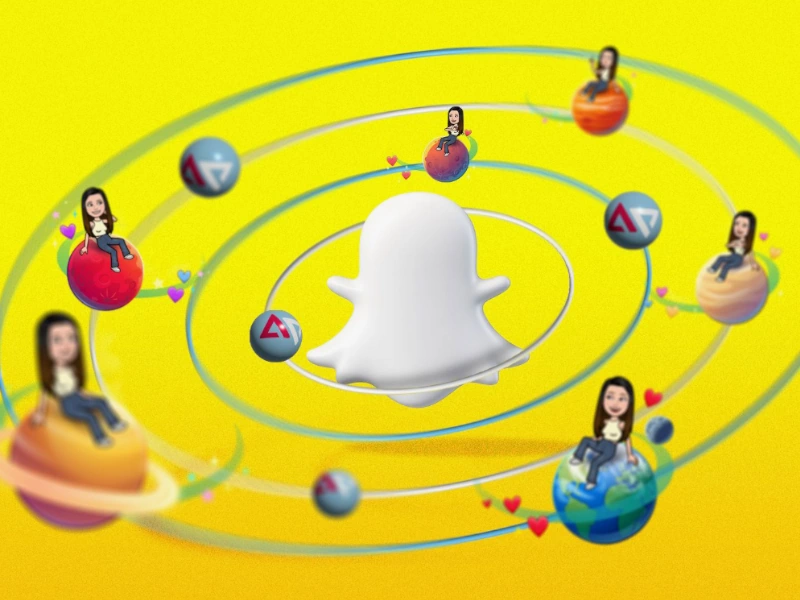
Anyone who spends time on Snapchat has likely noticed a small planetary icon appearing on a friend’s profile, tucked beside a gold badge marked Best Friends or Friends. This feature, known as the Snapchat Solar System, has become one of the most talked about additions to the app’s premium subscription tier, sparking curiosity, confusion, and no shortage of social speculation among users trying to decode exactly what their planet placement says about a friendship.
This article explains what the Snapchat Solar System actually is, how the ranking system works, what each planet represents, and how to view your own placement within a friend’s personal orbit.
What the Snapchat Solar System Actually Is
The Snapchat Solar System, officially referred to as the Friend Solar System, is an exclusive feature available only to Snapchat Plus subscribers, the app’s paid premium tier that unlocks experimental and early access features. At its core, the feature offers a playful, visual reimagining of Snapchat’s existing Best Friends ranking system, replacing simple numbered lists with a planetary metaphor built around the structure of the actual solar system.
In this system, the Snapchat Plus subscriber is positioned at the center as the Sun, while their top eight closest friends orbit around them as planets. Each planet corresponds to a specific rank, determined by how frequently two users interact through snaps, chats, streaks, and other engagement on the platform. Rather than displaying a plain numbered list of top friends, the feature transforms that same underlying data into a more visually engaging, astronomically themed representation.
How the Planet Ranking System Works
The order of planets in the Snapchat Friend Solar System mirrors the order of planets in our actual solar system, moving outward from the Sun. This means the closest planet represents the closest friend, while the farthest planet represents the eighth and final ranked friend within the system.
Mercury sits closest to the Sun and represents a user’s single closest friend, the person they interact with most frequently through snaps, chats, and shared streaks. From there, the ranking proceeds outward through Venus, Earth, Mars, Jupiter, Saturn, Uranus, and finally Neptune, which represents the eighth and least frequently interacted with friend among the top ranked group. Each planet placement is generated automatically based on interaction data, meaning users do not manually assign friends to specific planets themselves.
Importantly, this ranking system is not static. Because it reflects ongoing interaction patterns rather than a fixed friendship status, a friend’s planet placement can shift over time as communication habits change. A friend represented by Venus one month could move closer toward Mercury with increased interaction, or drift outward toward Neptune if conversations slow down, making the feature a dynamic, continuously updating reflection of current engagement rather than a permanent label.
What Each Planet Represents
While the core mechanic behind every planet is the same, measuring relative interaction frequency, users researching the feature often want a clear breakdown of what each specific ranking signifies within the broader system.
Mercury represents the number one spot, reserved for the friend with the highest volume of shared snaps, chats, and interaction overall. Being ranked Mercury in someone’s Solar System indicates an especially active, high frequency connection on the platform. Venus follows as the second closest ranking, still reflecting a strong, consistent level of interaction just behind the top spot. Earth, sitting third, is often associated with a balanced, steady friendship that does not necessarily require constant, high volume interaction to remain meaningful. The rankings continue through Mars, Jupiter, and Saturn, each reflecting progressively less frequent interaction, before reaching Uranus and finally Neptune, which represents the lowest ranked position within the top eight, still meaningful enough to appear in the Solar System, but reflecting comparatively less frequent engagement than the friends ranked closer to the center.
How to View Your Own Planet Placement
Viewing where you stand within a friend’s personal Solar System requires an active Snapchat Plus subscription, since the feature is exclusively tied to that premium tier. To check your placement, users typically open a friend’s profile and look for a badge featuring a colored ring alongside a label such as Best Friends or Friends, indicating whether they fall within that friend’s top ranked circle. Tapping this badge reveals the specific planet assigned to that relationship from the other person’s perspective.
It is worth noting that this view is private and personal. A user can see their own planet ranking within someone else’s Solar System, but the reverse is not visible to that other person unless they check independently through their own Snapchat Plus access. This one directional visibility keeps the feature feeling personal and low pressure, rather than turning friend rankings into a publicly broadcast comparison.
Some reporting on the feature also notes that the Friend Solar System may be disabled by default for new Snapchat Plus subscribers, meaning users may need to manually enable it within the app’s settings before they can begin viewing planet placements.
Platform Availability
The Snapchat Friend Solar System is generally available through the Snapchat mobile app on both Android and iOS devices. While Snapchat does offer a desktop browser experience for certain core functions, the Solar System feature itself has been reported as accessible primarily through the mobile app rather than through desktop access, reflecting its design as a quick, visual mobile interaction rather than a full featured desktop tool.
Why the Feature Has Resonated With Users
Part of the appeal behind the Snapchat Solar System lies in how it reframes a familiar concept, tracking closest friends, into something more visually engaging and shareable in conversation. Instead of a plain numbered ranking, the planetary metaphor gives users a fun, easily discussed way to talk about friendship dynamics, playfully comparing who holds the Mercury spot or joking about slipping toward Neptune after a period of less frequent contact.
This kind of gamified social ranking has become a recurring pattern in how modern social platforms encourage engagement, transforming ordinary usage data into a more emotionally resonant, visually interesting format. For Snapchat specifically, a platform closely associated with younger users who place high value on social connection and friendship status, this playful astronomical framing has proven to be an effective way to deepen engagement with its premium subscription offering.
Final Thoughts
The Snapchat Solar System offers a creative, visually engaging way to represent one of the platform’s core social features, tracking who you interact with most closely. By translating simple engagement data into a planetary ranking system, complete with a dynamic, ever shifting order based on real interaction patterns, Snapchat has turned a familiar best friends list into something users find genuinely fun to explore, discuss, and occasionally worry about when a favorite friend drifts a little farther from the Sun.