


Do you often need clarification on converting between cups and pounds? Whether you’re an experienced home cook or a baking enthusiast, mastering the art of precise measurements is crucial for achieving culinary perfection.
One recurring question in the kitchen is, “How many cups are in a pound?” Understanding this conversion is like unlocking a hidden treasure trove of culinary possibilities, enabling you to seamlessly follow recipes, experiment with ingredients, and confidently create mouthwatering dishes.
In this comprehensive guide, we will embark on a journey of discovery, exploring the relationship between cups and pounds in meticulous detail.
By the end, you’ll have a firm grasp on this essential kitchen conversion, empowering you to navigate recipes, tailor your measurements, and bring your culinary creations to life with impeccable accuracy.
Cup
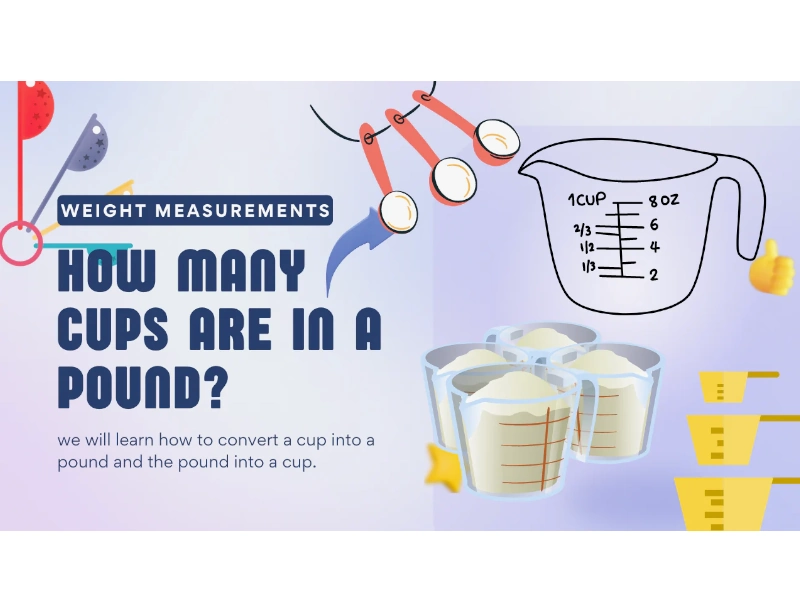
A frequent measurement used in recipes is the cup. It is approximately 236 millilitres or eight fluid ounces.
16 cups of components make up one pound. Therefore, it’s crucial to remember that 1 pound = 16 cups when converting between pounds and cups.
Making sure you have the appropriate amount of each ingredient and measuring the ingredients for a recipe can be made easier by being aware of this conversion.
Knowing how many cups there are in a pound makes changing your measurements into the right unit simple. You will always receive correct results, thanks to this!
What Does Pound Mean?
The Imperial measuring system uses the pound as its unit of weight and mass. It weighs the same as 0.45 kilogrammes or 16 ounces.
When considering items that are calculated by weight rather than volume, like butter or sugar, one pound is equal to 453.6 grams.
You may convert your measurements into the proper unit and achieve consistent results by knowing how many cups are in a pound.
The Difference Between UK Cup and US Cup:
When it comes to measuring ingredients in the kitchen, precision is key. However, if you’ve ever explored international recipes or encountered measurements from different regions, you might have noticed variations in the use of cups as a unit of measure.
One such distinction is the difference between the UK and US cups.
The UK and the US have slightly different standards for measuring cups, which can lead to confusion when following recipes across borders.
The UK cup, also known as the imperial cup, holds ten fluid ounces (284 millilitres) of liquid, while the US cup, the most commonly used cup measurement, holds 8 fluid ounces (236.6 millilitres) of liquid.
How to Convert Cups into Pounds and Pounds into Cups:
Converting between cups and pounds is a valuable skill in the kitchen. Whether you need to adjust a recipe or want to understand the weight of an ingredient in cups, knowing how to convert between these two units of measurement can save the day.
Here’s a straightforward guide on how to convert cups into pounds and pounds into cups.
Converting Cups to Pounds:
Identify the density of the ingredient: Different components’ conversions from cups to pounds will change because of their different thicknesses. The conversion for flour will differ from that for sugar or liquid substances, for instance.
Calculate the conversion factor: For the ingredient you’re using, look up the precise conversion factor. This quantity indicates the component’s weight in pounds per cup. Usually, you can find it in conversion tables, internet recipe databases, or cookbooks.
Do the conversion calculation: To get the weight in pounds, multiply the number of cups by the conversion factor. For instance, multiplying 2 cups of flour by the conversion factor would result in 1 pound if the conversion factor for flour is 0.5 pounds per cup.
How to Convert Pounds of Ingredients into Cups:
Converting pounds of ingredients into cups can be useful when you have a recipe that specifies measurements in pounds but prefer to work with cups instead.
To ensure accurate conversions and maintain the desired consistency in your culinary creations, follow these steps to convert pounds of ingredients into cups:
Determine the ingredient’s density: Each element has a unique density, meaning the weight-to-volume ratio can vary.
Conclusion
Whether you’re a seasoned cook or an enthusiastic beginner, knowing the relationship between cups and pounds empowers you to navigate a wide range of recipes confidently.
It enables you to scale ingredients appropriately, adjust recipes to suit your needs, and ensure the desired taste and texture in your culinary creations.
Remember to consider the specific conversion factors for different ingredients and cup measurements, such as the distinction between the UK and US cups.
Attention to detail and precision in height play key roles in achieving culinary success.
By mastering the conversion between cups and pounds, you open up a world of culinary possibilities.
From perfectly measured ingredients in a delicious cake to a well-balanced sauce in a savory dish, your understanding of this conversion will elevate your cooking skills and enhance your overall culinary experience.
So, the next time you encounter a recipe that lists ingredients in pounds or cups, you can confidently convert between the two, ensuring that your measurements are accurate and your culinary endeavors are met with exceptional taste and satisfaction.