












Key Takeaways
- Kitty Hawk crane lifts require planning for wind, sand, access limitations, and elevated structures.
- The right crane depends on reach and lift radius as well as the load’s estimated weight.
- Photos and clear site details can make an Albemarle Crane Service request more accurate.
- Crane support can be useful for HVAC units, construction materials, trees, boats, pools, sheds, and containers.
- Safety depends on site preparation, qualified personnel, communication, rigging, and work-zone control.
When a heavy item must be lifted over a roof, fence, mature trees, raised deck, or narrow coastal lot, the safest first step is to plan the lift around the actual site. In Kitty Hawk, that means sharing the load, location, access route, placement point, and timing with our Albemarle Crane Service before equipment arrives. A complete request helps determine whether a crane can be positioned safely and what reach, setup space, and coordination the project may require.
Outer Banks lifting work is rarely a simple matter of choosing the largest available crane. Sandy terrain, elevated beach homes, shifting weather, overhead obstacles, vegetation, and limited room for trucks can all affect the plan. A well-prepared lift considers the weight of the object, the horizontal distance from the crane to the load, the height of the placement area, and the condition of the ground beneath the crane.
For a homeowner, contractor, marina operator, or property manager, early planning can prevent an avoidable delay on lift day. A crane may be needed because a load cannot travel through a driveway, around a home, or across completed landscaping without creating unnecessary risk or damage. It can also help a contractor place materials precisely when other equipment does not have the needed height or reach.
Kitty Hawk’s setting makes access particularly important. Homes may sit above grade, lots can be long and narrow, and coastal properties often have decks, fences, trees, utility lines, or neighboring structures close to the intended work area. These conditions do not automatically prevent a lift, but they do make a site-specific review valuable.
Local conditions in Kitty Hawk also shape how a lift is staged. Lots near the Kitty Hawk Woods maritime forest can be shaded by tall pines and oaks, which may require crews to plan around canopy limbs before the crane is positioned. Properties along the sound side can sit lower and wetter than oceanfront homes, while others near the highway corridor face heavier traffic and tight turning space for delivery trucks. Salt-laden air also means that rigging hardware, lifting straps, and coated components should be inspected before use, since corrosion can reduce the reliability of equipment that is already working in a demanding environment. Scheduling matters too, because summer visitors, weekend rental turnover, and seasonal storm preparation can change how available a street, driveway, or staging area may be on a given day.
After a severe storm or when a damaged tree threatens a home, a driveway, or nearby structures, a crane service for tree removal on the Outer Banks can support controlled sectional removal alongside a qualified tree crew. The crane can lift cut sections away from sensitive areas rather than allowing them to drop into a restricted work zone.
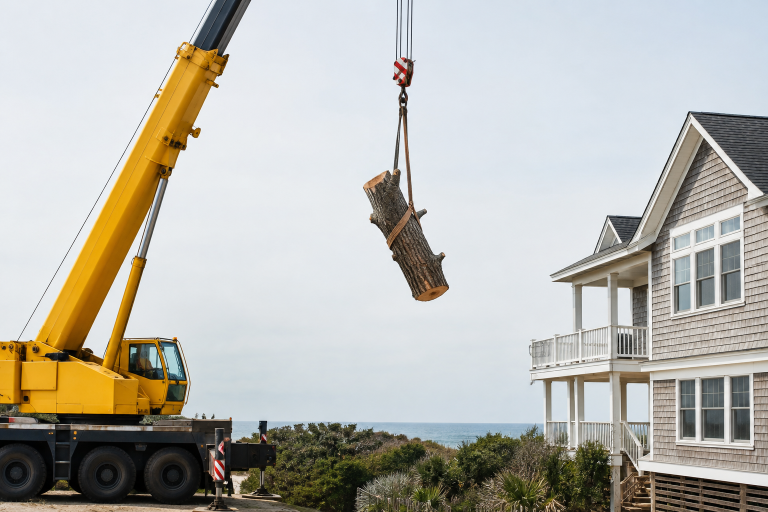
Why Crane Work in Kitty Hawk Requires Local Planning
Ground Conditions and Setup Space
A crane needs a suitable setup area, including room for the truck, outriggers, ground protection where appropriate, and a controlled work zone. Sand, moisture, soft soil, uneven surfaces, pavement edges, and slopes can influence where equipment can safely sit. The crew must evaluate the site rather than assume that an open-looking yard or driveway is suitable for crane setup.
Wind, Weather, and Coastal Exposure
Wind can affect suspended loads, particularly broad or irregular items such as roof materials, HVAC equipment, tree sections, boats, and pool components. Conditions may require rescheduling or changing the sequence of work. Communication between the operator, rigging crew, and other contractors is essential when the load is moving near structures or into a tight placement area.
Protecting Coastal Properties
Careful routing and setup also matter around dunes, landscaping, and sensitive ground cover. Research from North Carolina’s Outer Banks dune environments highlights the role that dune structure and vegetation can play in storm resilience. For a lifting project, the practical lesson is simple: access and staging should be planned to avoid unnecessary disturbance to the property.
Matching the Crane to the Lift
Crane capacity is not the only factor in equipment selection. A load that is manageable close to the crane may require a different setup when it must be placed farther away or higher above the ground. The final decision should account for the load’s verified or estimated weight, rigging, lift radius, boom length, placement height, site access, ground conditions, and obstacles.
The company lists several fleet options for Outer Banks work, including a 26-ton Altec boom truck with a 102-foot main boom, a 55-ton National crane with a 126-foot main boom, and a 100-ton Link-Belt mobile crane with a 140-foot main boom. Smaller or more accessible jobs may call for a boom truck, while larger construction, marine, or complex placements may require additional capacity or reach. The company reviews the individual lift rather than relying on a one-size-fits-all answer.
Common Kitty Hawk Projects That May Need a Crane
HVAC and Mechanical Equipment
HVAC contractors may need crane support when a new or replacement unit must be installed on a roof, elevated platform, or enclosed side yard. Before requesting service, provide the unit specifications, pickup location, final placement point, roof or platform height, and the HVAC contractor’s preferred schedule.
Planning should also account for the weight of the equipment, the reach required to position it, and any obstacles between the crane and installation point. Early coordination between the crane operator and HVAC crew helps ensure that the equipment arrives when the site is ready and that workers can complete the installation efficiently.
Construction Materials and Structural Components
Builders can use crane support for trusses, beams, framing packages, modular components, and other materials that need to reach an upper level or cross a restricted lot. Coordinating the lift with material delivery and the construction crew can reduce idle time and help keep the job moving.
Site conditions matter, particularly when working on coastal properties with narrow driveways, sandy ground, or limited space for equipment positioning. Contractors should discuss ground stability, overhead obstructions, and the planned lifting sequence before scheduling the crane.
Pools, Sheds, Pumphouses, and Storage Containers
Prefabricated structures and large components may need to travel over fences, homes, landscaping, or utility connections. Provide dimensions, manufacturer weight information when available, access photos, and a clear description of where the item must be set. This information helps identify potential conflicts before mobilization.
It is also helpful to confirm whether the delivery vehicle can access the property and whether temporary access restrictions or landscaping protection will be necessary. A site assessment can help determine the safest practical setup.
Boats and Marine Equipment
Marine-related lifts require close attention to balance, rigging, access, and the instructions of the boat owner or marine contractor. In Kitty Hawk and nearby Outer Banks communities, a lift plan may also need to account for the available staging area around docks, yards, or service facilities.
Weather and coastal exposure deserve special consideration. Wind can affect load control, especially when lifting large or irregularly shaped objects. The crane operator should evaluate current conditions and follow established operating limits before proceeding. Owners should also clarify who is responsible for preparing the boat, disconnecting equipment, and securing the destination area. Clear responsibilities help prevent delays and support a more coordinated lift from start to finish.
What to Include in a Crane Service Request
- Project address: Include the Kitty Hawk address or nearby community.
- Load description: State whether the item is an HVAC unit, tree section, boat, pool shell, shed, truss, container, or other object.
- Estimated weight and dimensions: Use manufacturer specifications or contractor information when possible.
- Pickup and placement points: Explain where the load starts and where it needs to go.
- Photos of the site: Show driveways, trees, wires, fences, buildings, and the proposed crane setup area.
- Timing and other crews: Identify deadlines, emergency conditions, and the contractors involved.
Safety Is a Process, Not an Assumption
A professional lift involves more than moving an object from one place to another. The work area should be controlled, workers should stay clear of suspended loads, and rigging and signaling should be handled by qualified personnel. The federal crane and derrick safety guidance addresses core issues including ground conditions, operator requirements, signal persons, work-area control, and safe operations around suspended loads.
Customers can assist the process by keeping the setup area clear, providing accurate load information, arranging access for other crews, and identifying known hazards before the scheduled lift. No online checklist replaces an on-site review, especially on a constrained coastal property.
Contact the Crane Team in Kitty Hawk
Whether the job involves a planned installation, a construction schedule, a marine lift, or storm-related cleanup, a detailed request gives the crane team a stronger starting point. For difficult Outer Banks lifting projects, clear information, careful site planning, and coordinated communication can help turn a challenging placement into a controlled operation.