










Search for “broken keyboard grok answer” and you’ll find a genuinely confusing mix of content. Some articles accurately explain a real introductory programming exercise. Others treat the phrase as though it describes an AI chatbot troubleshooting physical keyboard hardware.
Still others invent an entirely abstract “meme” concept or a fictional comparison between AI models. Only one of these interpretations is actually correct.
This article explains what the Broken Keyboard exercise genuinely is, how to approach it, and why the other interpretations circulating under the same search phrase should be disregarded.
What Broken Keyboard Actually Is
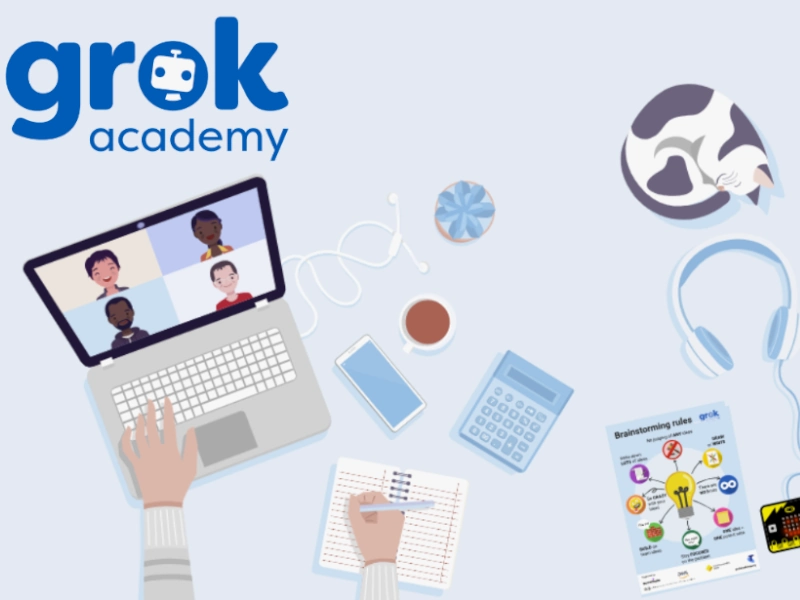
Broken Keyboard is a real introductory programming exercise from Grok Learning, also known as Grok Academy, an Australian computer science education platform used widely in schools to teach programming fundamentals, commonly through Python.
It’s worth being clear about the name here: this “Grok” has no connection to Grok, the AI chatbot developed by xAI. They are entirely separate organizations that happen to share a name.
The Broken Keyboard exercise is a string manipulation challenge, typically appearing in an early module of an introductory Python course. It presents a scenario where certain keys on a keyboard are broken and no longer register when typed, and asks the student to write a program that filters a given text so that any character corresponding to a broken key is removed, while preserving the original order of the remaining characters exactly.
How the Exercise Works
The basic structure of the problem involves two pieces of input: a string listing which specific characters, or keys, are broken, and a string of text representing what was typed. The program’s job is to go through the text character by character, check whether each character appears in the broken keys list, and build an output string that includes only the characters that are not broken, in their original order.
A typical, correct solution in Python follows this general logic:
python
broken = input()
text = input()
result = “”.join(char for char in text if char not in broken)
print(result)
This approach reads the broken keys, reads the text, then uses a loop, expressed here as a list comprehension, to keep only the characters from the text that don’t appear in the broken keys string, joining them back together into a single output string.
Common Mistakes Students Make
A few recurring errors tend to trip up students working through this exercise. Attempting to modify a string in place rather than building a new one is a common issue, since strings in Python are immutable and cannot be changed character by character directly.
Processing characters out of order, rather than looping through the text from left to right, can also produce an output that technically contains the right characters but in the wrong sequence. Finally, failing to handle edge cases, such as empty input strings or cases where no characters are actually broken, can cause a solution that otherwise works to fail on specific test cases.
Why Other, Unrelated Definitions Exist
Separate from this real programming exercise, several pieces of content use the same search phrase to describe entirely different, fabricated concepts.
One version treats “broken keyboard grok answer” as though it refers to literal keyboard hardware problems, offering generic troubleshooting advice, checking device drivers, cleaning keys, testing Bluetooth connections, framed around the idea that the AI chatbot Grok can help diagnose a malfunctioning keyboard.
While Grok, the AI chatbot, can certainly offer general troubleshooting advice for a broken keyboard the way any AI assistant might, this framing has nothing to do with the actual Grok Learning programming exercise the phrase originates from, and conflates two completely unrelated things sharing a name.
Another version invents an abstract “meme culture” concept, describing the phrase as referring to AI-generated responses that look garbled or corrupted, like text typed on a malfunctioning keyboard, yet are still somehow understandable.
This definition provides no verifiable origin, no specific examples of this supposed meme actually circulating anywhere, and reads as a speculative, invented reinterpretation rather than a documented cultural phenomenon.
A third version describes a fictional “Broken Keyboard Effect” as part of a comparison between Grok and a model referred to as “Claude 2,” using the phrase to describe how well an AI model supposedly handles messy, typo-filled prompts.
This framing is particularly unreliable, since “Claude 2” is not an accurate or current model name, and the entire “effect” described has no connection to the original Grok Learning exercise or any documented AI benchmarking terminology.
How to Tell the Real Exercise From the Fabricated Content
If you’re actually working through this problem as part of a Grok Learning course, the real exercise will always involve a text-filtering programming task, reading a set of broken characters and a text string, then producing filtered output.
If an article instead talks about keyboard hardware diagnostics, abstract AI meme culture, or AI model comparison benchmarks, it’s describing something unrelated to the actual programming challenge, regardless of how confidently it uses the same phrase.
Final Thoughts
Broken Keyboard is a genuine, well-defined introductory programming exercise from Grok Learning, asking students to filter broken characters out of a text string while preserving order, a useful early lesson in string manipulation and conditional logic.
Separately, and with no real connection to that exercise, the same search phrase has attracted several fabricated reinterpretations, treating it as literal keyboard troubleshooting, an invented meme concept, or a fictional AI model comparison benchmark.
Anyone searching for help with the actual programming problem should rely on the string-filtering explanation above, and can safely disregard the unrelated content built around the same coincidental search phrase.