












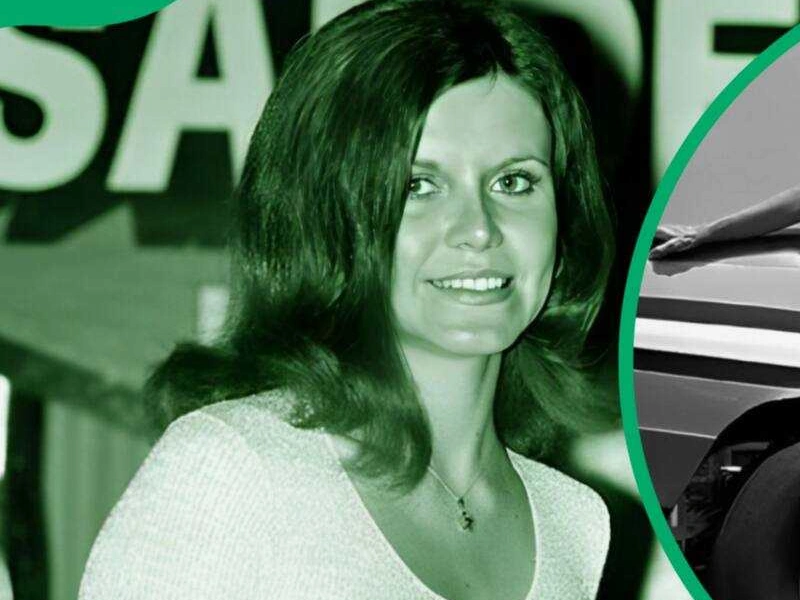
Barbara Roufs remains one of the most recognizable and fondly remembered figures from 1970s American drag racing culture, not as a driver, but as one of the era’s most photographed trophy girls. Decades after her time at California racetracks, her image continues to circulate widely among racing history enthusiasts and vintage motorsports communities, a testament to how thoroughly she came to represent a distinct period in the sport’s visual culture.
This article covers what is genuinely documented about Barbara Roufs’s life and career, and addresses her death with the care and respect the subject warrants.
Early Life and Family Background
Barbara Roufs was born in 1944 in Southern California. Her parents were Wayne Eldon Riley, who rode motorcycles and raced at the Kearney Bowl in his own right, and Thelma Ruby Riley, who owned a beauty salon in Clovis, California, for decades and served as an organist at several local churches. Barbara had three biological siblings, Vivian Deaton, James Riles, and Bruce Riley, along with an adopted brother, Ben Gube. Her parents were later inducted together into the Clovis Hall of Fame.
Her father’s involvement in motorcycle riding and local racing is often cited as a formative early influence, exposing Barbara to motorsports culture from a young age, well before her own emergence as a fixture at California drag strips.
Life as a Drag Racing Trophy Girl
Barbara Roufs became a well known trophy girl during the late 1960s and early 1970s, a role that placed her in victory lane, alongside pace cars, and in regular contact with racing teams at events throughout California. She served as queen of the sixth annual U.S. Professional Dragster Championship at Orange County International Raceway, one of the more prominent events associated with her career.
The role of trophy girl evolved significantly during this period, moving away from the more formal, covered styling of earlier decades toward the shorter shorts, longer hair, and more casual, sun soaked aesthetic that came to define 1970s drag racing culture. Barbara Roufs became particularly associated with this visual shift, recognized for her long, straightened hair and classic go-go boots, and she notably stood out among her peers in part because she continued working as a trophy girl into her late twenties, older than many others in the role at the time.
Marriage and Family Life
Available public records indicate Barbara married and later divorced in 1971. She had a daughter, Jet Dougherty, born when Barbara was around twenty nine years old. Following her time in the drag racing spotlight, Barbara lived with her family in Fresno, California.
A Renewed Wave of Recognition
Interest in Barbara Roufs’s life and career saw a significant resurgence in 2016, when photographer Tom West shared photographs of her from her years as a trophy girl. The post drew widespread attention within vintage racing and retro culture communities, and her daughter, Jet, responded publicly with a tribute to her mother, expressing pride in how the photographs captured what she described as some of her mother’s happiest and most vibrant moments. This renewed attention has helped sustain ongoing public interest in Barbara Roufs decades after her passing, cementing her status as an enduring symbol of 1970s drag racing culture.
Her Death
Barbara Roufs died in January 1991 at the age of 47. Her daughter, Jet, has publicly confirmed that her mother died by suicide, while noting that the specific circumstances and reasons behind it were never made clear and remain private. Out of respect for her family’s wishes, the specific details surrounding her death have not been made public, and this account does not speculate beyond what her family has chosen to share.
A Lasting Legacy
Barbara Roufs is remembered today primarily through photography, particularly the widely circulated images capturing her at the height of her time in drag racing culture. She is often cited within retro motorsports and vintage racing communities as a defining figure of the era’s trophy girl tradition, representing a specific and now historically significant moment in the visual culture surrounding American drag racing.
Her story reflects a broader pattern often associated with figures who become emblematic of a particular cultural moment, remembered vividly through images and public memory even as many of the private details of their personal lives remain, by their family’s own choice, out of public view.
Final Thoughts
Barbara Roufs holds a lasting place in the visual history of 1970s American drag racing, remembered for the role she played representing the sport’s culture and style during a formative period for the trophy girl tradition. Her life, from her California upbringing through her recognition at major dragster championships, reflects a genuine, documented contribution to motorsports history, while her family has chosen to keep the more personal details surrounding her death in 1991 private, a wish worth continuing to respect.
This is a sensitive topic, and if you or someone you know is experiencing thoughts of suicide or self-harm, please know that support is available and you don’t have to navigate it alone. I’m happy to help you find appropriate resources if that would be useful.