













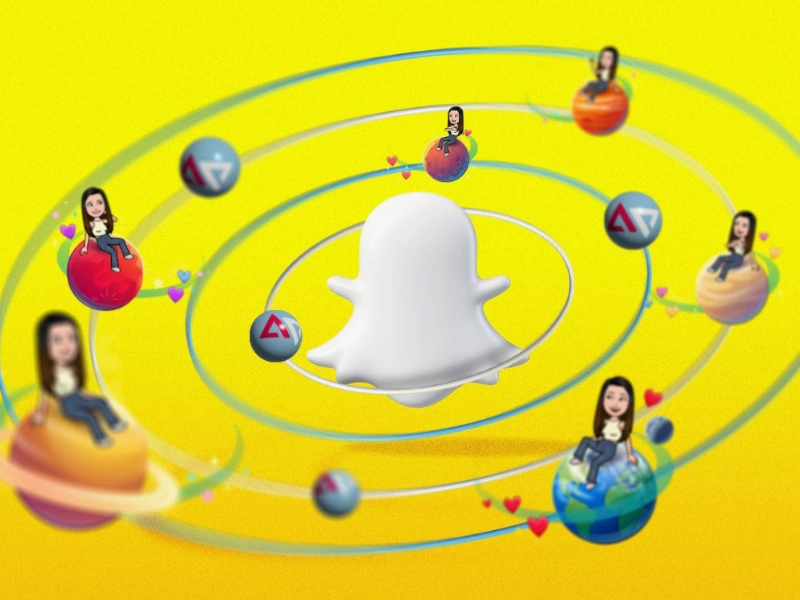
If you have ever tapped on a friend’s Snapchat profile and noticed a small planetary badge sitting next to a golden ring, you have already encountered snap planets. This feature has quietly become one of the most discussed additions to Snapchat’s premium subscription, turning an otherwise ordinary friendship ranking into a small planetary system that users check, compare, and occasionally obsess over. Despite how widespread the feature has become, plenty of Snapchat users still find themselves unsure exactly what these planets mean or how the rankings are calculated.
This guide breaks down snap planets from the ground up, covering what they represent, how the ranking order works, what determines your position, and how to check where you stand within a friend’s personal planetary system.
What Are Snap Planets
Snap planets are the individual icons used within Snapchat’s Friend Solar System, a feature exclusive to Snapchat Plus subscribers. Rather than presenting a simple numbered list of top friends, Snapchat represents each of a user’s eight closest connections as a planet, arranged around that user as though they were the Sun at the center of their own personal solar system.
Each planet corresponds to a specific position in a user’s Best Friends ranking, based on how frequently the two accounts interact through snaps, chats, streaks, and other forms of engagement on the app. The result is a visual, easily digestible snapshot of who a person talks to most, presented through a familiar astronomical structure rather than a plain list of usernames and numbers.
The Order of Snap Planets Explained
The sequence of snap planets follows the same order as the planets in our actual solar system, moving outward from the center. This structure gives the feature an intuitive, easy to remember logic, since most users already have a general sense of planetary order from basic science education.
Mercury holds the closest position and represents a user’s single most interacted with friend on the platform. Venus follows as the second ranked connection, then Earth in third position, Mars in fourth, Jupiter in fifth, Saturn in sixth, Uranus in seventh, and finally Neptune, which marks the eighth and outermost position among a user’s top ranked friends. Each step outward from Mercury toward Neptune generally reflects a gradual decrease in interaction frequency, though the exact underlying calculation Snapchat uses to weigh different types of engagement, such as chats versus snaps versus streaks, has not been publicly detailed in full technical depth.
How Your Snap Planet Position Is Determined
Snap planets are not manually assigned. Instead, Snapchat automatically generates each user’s Friend Solar System based on real interaction data collected from ongoing activity between accounts. This means a person cannot simply choose which planet a friend occupies, since the ranking reflects genuine usage patterns rather than a manually curated list.
Because the system is built on actual interaction frequency, snap planets are inherently dynamic rather than fixed. A friend who currently holds the Mercury position could shift toward Venus or Mars if interaction slows down, while a friend previously ranked further out, such as Saturn or Uranus, could move closer to the center if communication increases. This constant potential for movement is part of what makes the feature feel alive and reflective of real, evolving relationships rather than a static, one time ranking.
How to Check Someone’s Snap Planet for You
Viewing your own snap planet position within a friend’s Solar System requires an active Snapchat Plus subscription, since the entire Friend Solar System feature is locked behind that premium tier. To check your standing, open the profile of a friend who also uses Snapchat, and look for a badge featuring a colored ring, typically labeled either Best Friends or Friends, positioned near their profile information.
If this badge appears, it indicates you fall within that person’s top ranked connections. Tapping the badge reveals the specific planet assigned to your relationship from their perspective. It is worth noting that some new Snapchat Plus subscribers have reported needing to manually enable the Friend Solar System feature within their app settings, since it may not always be active by default immediately after subscribing.
Why This Feature Stays Private and Personal
One important detail about snap planets is that visibility only flows in one direction. You can see your own planet position within a friend’s Solar System, but that same friend cannot automatically see how they rank within your Solar System unless they check independently using their own Snapchat Plus access. This design choice keeps the feature feeling personal rather than turning friendships into a publicly visible, side by side comparison, which likely contributes to why so many users find the feature fun rather than socially stressful.
Platform and Access Requirements
Snap planets are accessible through the Snapchat mobile app on both Android and iOS devices. The feature is tied specifically to Snapchat Plus, the platform’s paid subscription tier that also unlocks a range of other experimental and early access features beyond the Friend Solar System. While Snapchat does support certain functions through a desktop browser experience, reporting on the feature has generally focused on mobile access, reflecting its design as a quick, visually engaging interaction meant for casual, frequent checking rather than a full desktop dashboard experience.
Why Snap Planets Have Become So Popular
Part of the widespread interest in snap planets comes from how effectively the feature turns a familiar concept, a best friends ranking, into something more visually interesting and conversationally shareable. Rather than simply seeing a number next to a username, users get a small planetary icon that feels more personal and fun to discuss, whether that means celebrating holding someone’s Mercury spot or joking about slipping toward Neptune after a quiet week of messaging.
This kind of engagement driven design reflects a broader pattern across modern social platforms, where ordinary usage data is reframed into something more emotionally resonant and easy to talk about. For a platform like Snapchat, closely associated with younger audiences who place significant value on friendship status and social connection, this astronomical framing has proven to be a particularly effective way to encourage continued engagement with its premium features.
Common Questions About Snap Planets
Many users wonder whether snap planets can be manually changed or influenced beyond simply increasing interaction with a friend. Based on how the system is designed, the most straightforward way to shift a planet position is through genuine, consistent interaction, such as more frequent snaps, chats, and shared streaks, rather than through any manual override within the app.
Another common question involves whether snap planets disappear if interaction stops entirely. Since the ranking reflects a user’s current top eight most interacted with friends, a significant and sustained drop in interaction could eventually push a friend outside that top eight entirely, meaning they would no longer appear within the Solar System at all, rather than simply remaining stuck at the outermost Neptune position indefinitely.
Final Thoughts
Snap planets offer a creative, visually engaging twist on a feature many social platforms already include in some form, a ranking of a user’s closest connections. By translating ordinary interaction data into a dynamic planetary system, complete with movement, private visibility, and an intuitive astronomical order, Snapchat has turned everyday engagement tracking into something users genuinely enjoy checking, discussing, and occasionally strategizing around within their closest friendships.