













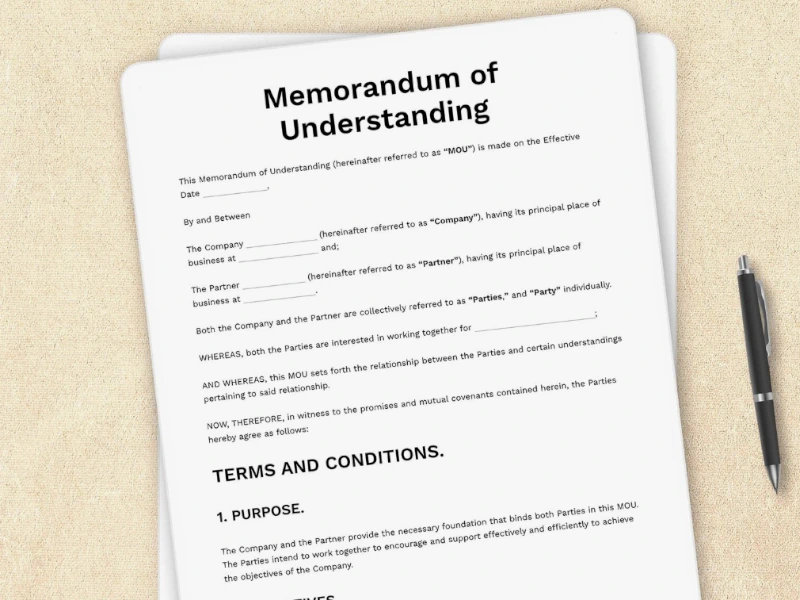
Behind every major government decision, whether it involves new legislation, a significant funding commitment, or a shift in national policy, lies a structured process designed to ensure that decisions are made carefully, collectively, and with full consideration of the available evidence. In Westminster style parliamentary systems such as Canada, Australia, and the United Kingdom, one of the most important instruments in this process is the memorandum to cabinet, often referred to simply as an MC.
Although rarely seen by the public, the memorandum to cabinet plays a central role in how governments transform policy ideas into official, authorized action. This article explains what a memorandum to cabinet actually is, why it exists, how it is structured, and why it remains such a critical tool in modern executive governance.
What a Memorandum to Cabinet Actually Is
A memorandum to cabinet is a formal, confidential policy document submitted to Cabinet, or to one of its committees, by a government minister. Its core purpose is to request a formal Cabinet decision on a specific policy issue, legislative change, funding request, or strategic government initiative. Rather than functioning as a simple update or informal briefing, the memorandum to cabinet is designed to provide Cabinet members with the background, analysis, options, and recommendations needed to make an informed collective decision.
In Canada, where the process is particularly well documented, the Privy Council Office provides templates and detailed guidance for drafting these documents, reflecting how seriously the process is treated within government administration. Writing a memorandum to cabinet is typically the culmination of a long, often complex process involving extensive consultation, policy analysis, and internal departmental reflection before the document ever reaches Cabinet for consideration.
Why the Memorandum to Cabinet Process Exists
Government cannot rely on informal conversations or ad hoc discussions when making decisions that affect national policy, public spending, or legislative direction. Structured documentation is essential to ensure that decisions are grounded in evidence and careful analysis rather than urgency or political pressure alone.
This need becomes especially important in systems governed by the principle of collective Cabinet responsibility, a foundational concept in Westminster style governments. Under this principle, Cabinet decisions are made jointly, and once a decision is reached, all ministers are expected to publicly support it, regardless of their individual position during internal deliberations. The memorandum to cabinet serves as the procedural vehicle that enables this collective decision making model, ensuring that every minister has access to the same information and analysis before a decision is finalized.
When a Memorandum to Cabinet Is Required
A minister is generally required to prepare a memorandum to cabinet whenever a proposal needs formal Cabinet level approval. While specific triggers and procedures vary somewhat across different jurisdictions, certain patterns remain consistent. A memorandum to cabinet typically becomes necessary when a proposed initiative carries significant strategic, financial, or legal weight, such as introducing new legislation, committing substantial public funding, or implementing a major shift in government policy direction.
Because these documents are used to secure authoritative Cabinet backing, they are considered protected under Cabinet confidence rules in most jurisdictions, meaning their contents are not typically released to the public, particularly while deliberations are ongoing or shortly afterward.
The Structure of a Memorandum to Cabinet
While specific templates vary by country and department, memoranda to cabinet generally follow a highly organized structure designed to support efficient Cabinet level review. At its core, every memorandum to cabinet is built to answer a few essential questions: what problem or opportunity is being addressed, what options exist for addressing it, and what is being recommended.
A typical memorandum to cabinet includes several key components. A background or context section explains how the issue developed and why Cabinet attention is required. An options analysis section, often comparing two or three viable courses of action, evaluates the potential benefits, risks, and trade offs associated with each approach. A ministerial recommendation section presents the sponsoring minister’s proposed course of action, distilled into clear, focused language given the limited space typically available for this critical section. Additional sections may address financial implications, legal considerations, communications strategy, and in jurisdictions like Canada, specific requirements such as official languages impact analysis, ensuring the proposal accounts for its effects across all relevant policy dimensions.
The Relationship Between Memoranda to Cabinet and Treasury Board Submissions
In many government systems, particularly in Canada, a memorandum to cabinet often works in tandem with a related but distinct document known as a Treasury Board submission. While a memorandum to cabinet secures policy level approval for an initiative, a Treasury Board submission is typically the next step, seeking approval for the specific financial, personnel, or project related aspects of implementing that initiative.
This sequential relationship reflects a broader pattern in structured government decision making, separating the question of whether a policy direction should be approved from the more detailed operational question of how it will be funded, staffed, and executed. Treasury Board submissions tend to be highly detailed, focused on costing, risk management, and clear justification of funding needs, timelines, and performance measures, complementing the more strategic, policy focused nature of the memorandum to cabinet itself.
Global Variations in Cabinet Memoranda
While the memorandum to cabinet is most closely associated with Westminster style parliamentary systems, similar mechanisms exist in other forms of government, including presidential systems such as the United States. However, the underlying structure differs significantly. In presidential systems, executive decision making authority tends to rest with the president individually, rather than emerging from the collective responsibility of a Cabinet acting jointly, as is the case in Westminster style governance. Understanding these structural differences helps explain why the memorandum to cabinet process, and its emphasis on collective decision making, is particularly central to how Westminster governments operate.
Why This Process Matters
The memorandum to cabinet may operate largely out of public view, but its role in government is far from minor. It functions as a critical safeguard against poorly considered or hastily made policy decisions, ensuring that major government initiatives are backed by structured analysis, clearly defined options, and collective ministerial agreement before moving forward. For public servants working in policy or program development roles, understanding how to prepare an effective memorandum to cabinet is considered an essential skill, reflecting just how central this document remains to the practical functioning of modern government.
Final Thoughts
The memorandum to cabinet stands as one of the most important, if largely unseen, instruments of executive government. By requiring structured analysis, clear options, and a defined recommendation before Cabinet grants formal approval, this process helps ensure that significant government decisions are made thoughtfully and collectively rather than reactively. Understanding how memoranda to cabinet function offers valuable insight into the quiet but essential machinery that keeps modern government decision making organized, accountable, and grounded in careful deliberation.